For catering enterprises, stainless steel tableware is not just dining tools but also a crucial factor affecting customer experience, operational costs, and brand image. Bulk purchasing stainless steel tableware may seem simple, but it involves many details that require careful consideration. This article outlines five key considerations to help you make informed purchasing decisions.
Stainless steel tableware comes into direct contact with food, making material safety paramount. Different types of stainless steel vary significantly in corrosion resistance and safety:
Prefer Austenitic Stainless Steel: Prioritize products made from Austenitic stainless steel (like 304 stainless steel), Austenitic-Ferritic stainless steel, Ferritic stainless steel, or Martensitic stainless steel. These types generally offer better corrosion resistance and are more suitable for food contact.
Beware of Material Substitution: Some suppliers might use 420 material instead of 430, leading to insufficient polishing brightness and a higher defect rate. Request material certification documents from suppliers during procurement to ensure compliance with food safety standards.
Weight Reference: For items of the same thickness and design, products with better materials are often heavier, which can serve as a preliminary indicator.
The quality of craftsmanship directly affects the lifespan of the tableware and customer experience. Focus on these details during bulk purchases:
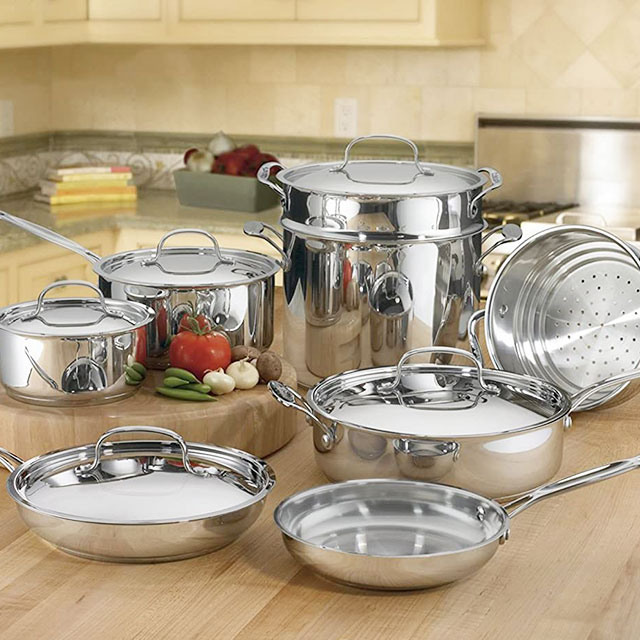
Surface Finish: The product surface should not have severe wire drawing marks, pitting, or uneven polishing causing differences in gloss. High-grade tableware should achieve a mirror-like brightness capable of reflecting clear images, with no obvious wire drawing traces.
Edge and Welding Treatment: Except for knife edges, all product edges should be smooth without sharp or prickly feels. Welded parts should be secure, without cracks, burn marks, or burrs.
Defect Tolerance: For common defects like pitting and sand holes, there should not be more than 10 per batch, no more than 3 within a 10mm radius on a single surface, and absolutely no pits or sand holes between 0.3mm and 0.5mm in size per batch.
Establish clear quality inspection mechanisms for bulk purchases to avoid receiving substandard products:
Set Inspection Standards: During inspection, focus on surface defects like scratches, pitting, creases, and contamination. These defects are unacceptable regardless of the material grade.
Thickness Tolerance Control: Different stainless steel products have varying thickness tolerance requirements. Category II tableware generally requires higher tolerance, around -3~5%, while Category I is typically -5%. Export products usually demand even stricter thickness tolerances.
Third-Party Inspection Assurance: For large-value orders or those with high-quality requirements, hire a third-party inspection company for pre-shipment inspection. The inspection report can serve as evidence for issues, potentially preventing greater losses.
Choosing the right supplier is key to successful procurement:
Sample Confirmation: For first-time collaborations or important products, always purchase samples first. Conduct rigorous tests on received samples, including material checks, functional tests, and detailed craftsmanship inspection.
Supplier Qualification Audit: Request suppliers provide qualification documents like business licenses and food operation permits, and verify their authenticity. Research supplier reputation through online queries, industry associations, and peer recommendations.
Platform Purchasing Tips: When purchasing on B2B platforms like Alibaba, prefer "Gold Supplier," "Verified Supplier," and suppliers with the "Bull Head" mark indicating strong merchants. Also, pay attention to the supplier's years of establishment, main products, and transaction levels.
Logistics, often overlooked, directly impact procurement costs and experience:
Clear Packaging Requirements: Specify packaging methods with the supplier to ensure product protection during transit. For export products, packaging must also meet contract requirements.
Transaction Security Assurance: Prioritize using Alibaba's secured transactions (like Trade Assurance orders) and avoid high-risk payment methods. Contracts should clearly list product descriptions, quantity, unit price, packaging requirements, delivery timelines, and after-sales service.
Build Long-Term Relationships: Establish long-term cooperative relationships with quality suppliers to secure stable procurement channels, better prices, and production priority.
Bulk purchasing stainless steel tableware is a systematic task requiring professional knowledge and meticulous attention. By strictly controlling these five key areas, catering businesses can not only procure high-quality, durable tableware but also effectively manage operational costs and enhance overall business efficiency.
Qingzhan Rustless Steel Co., Ltd. specializes in providing high-quality, food-grade stainless steel tableware for bulk B2B purchases. Our products meet strict material standards, undergo rigorous quality control, and come with reliable packaging and logistics support. Contact us today for a competitive quote and experience the difference quality makes.

Copyright © Jieyang Qingzhan Rustless Steel Co., Ltd. All Rights Reserved. | Sitemap | 粤ICP备14097592号